| BY: Andrea Raila |
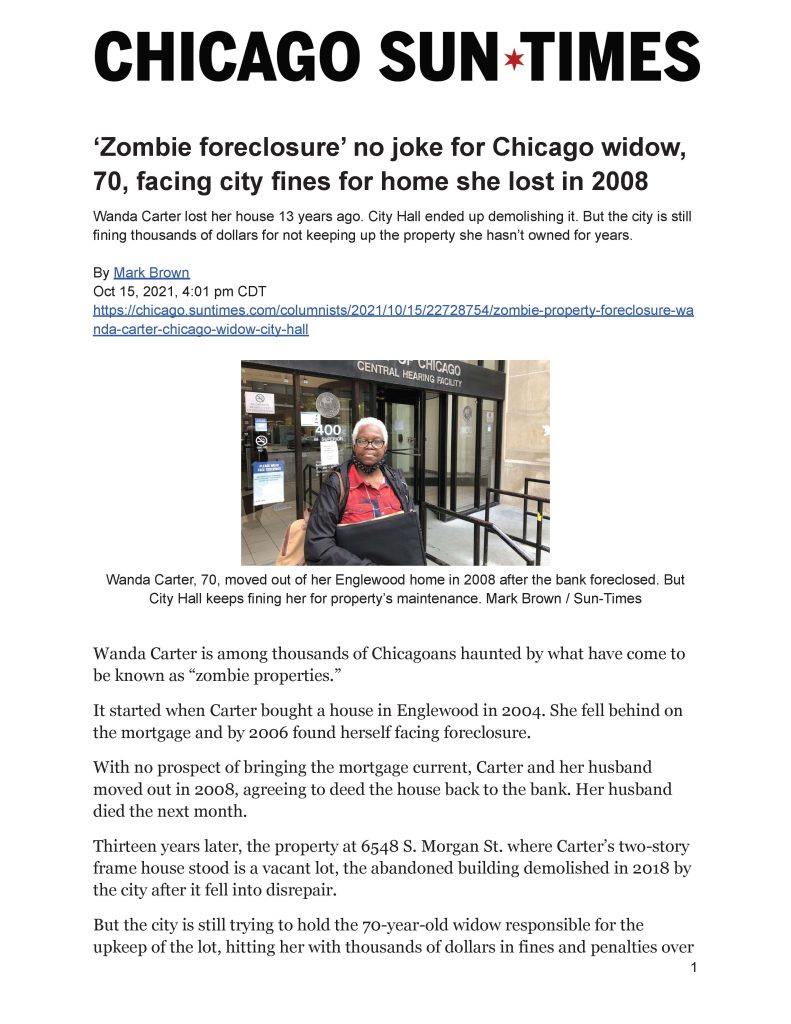
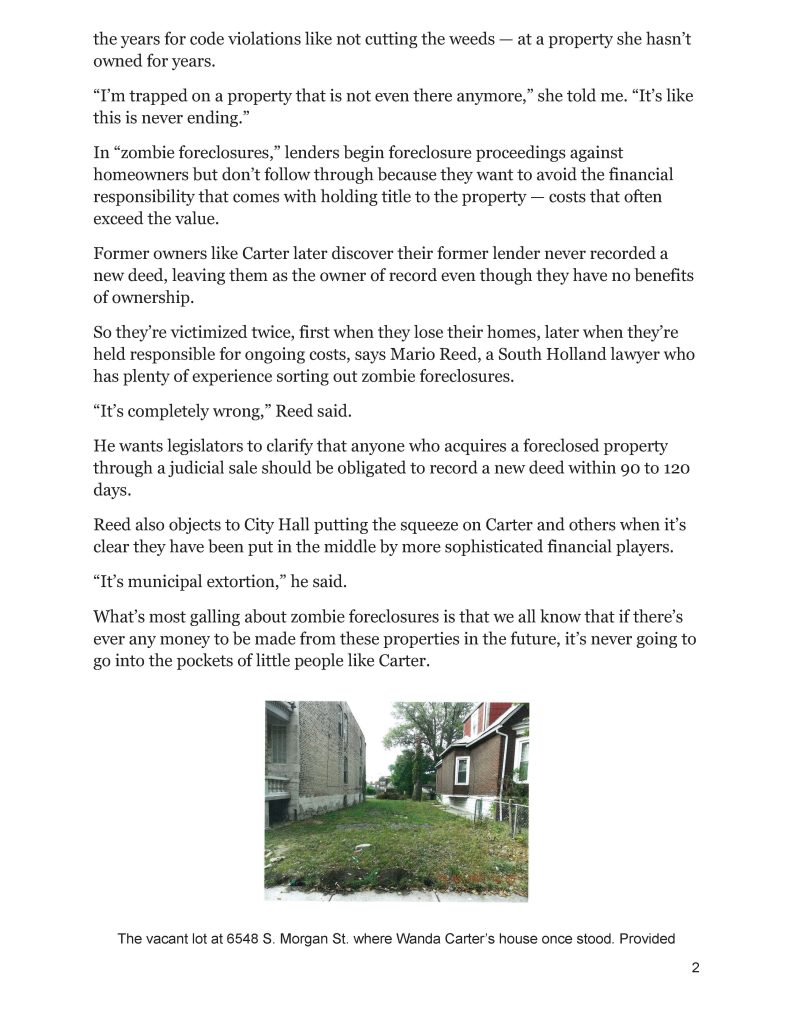
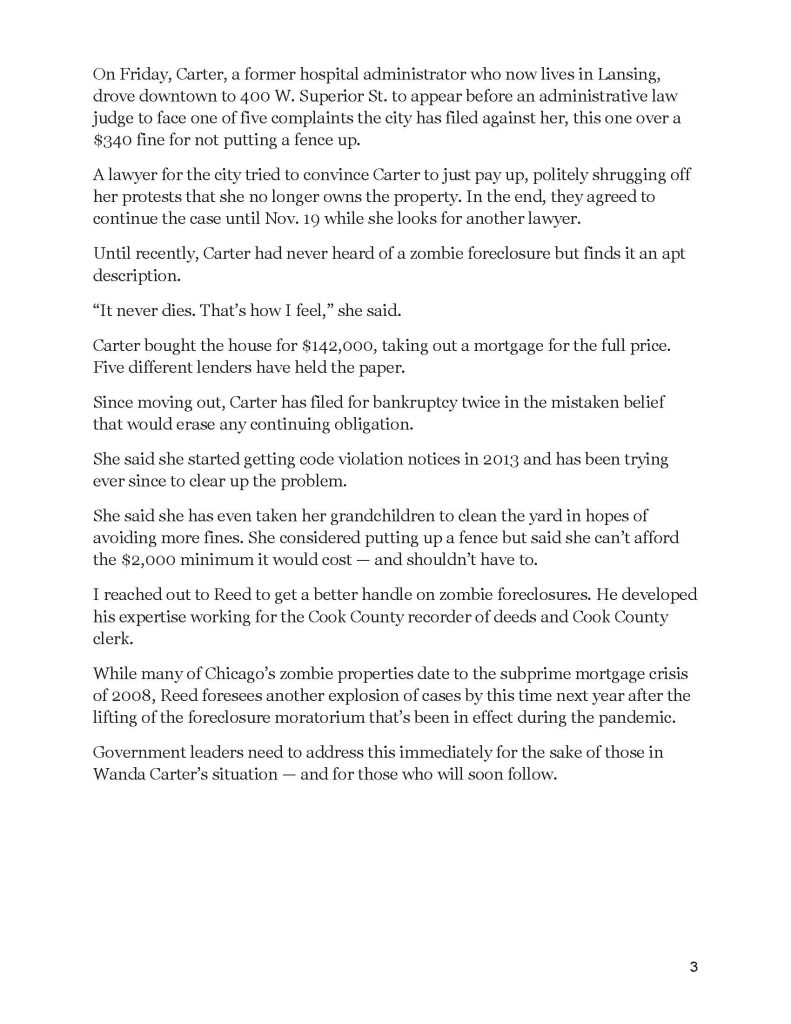
I’ve worked on property tax reform issues with many of you especially with Wanda Carter and Anthony Travis where we covered the Southwest townships alarming and continuous black foreclosures see https://www.traeninc.com/ See Anthony’s story cover by Ch 7 I-TEAM Investigators and Wanda’s foreclosure plight covered by the SunTimes attached
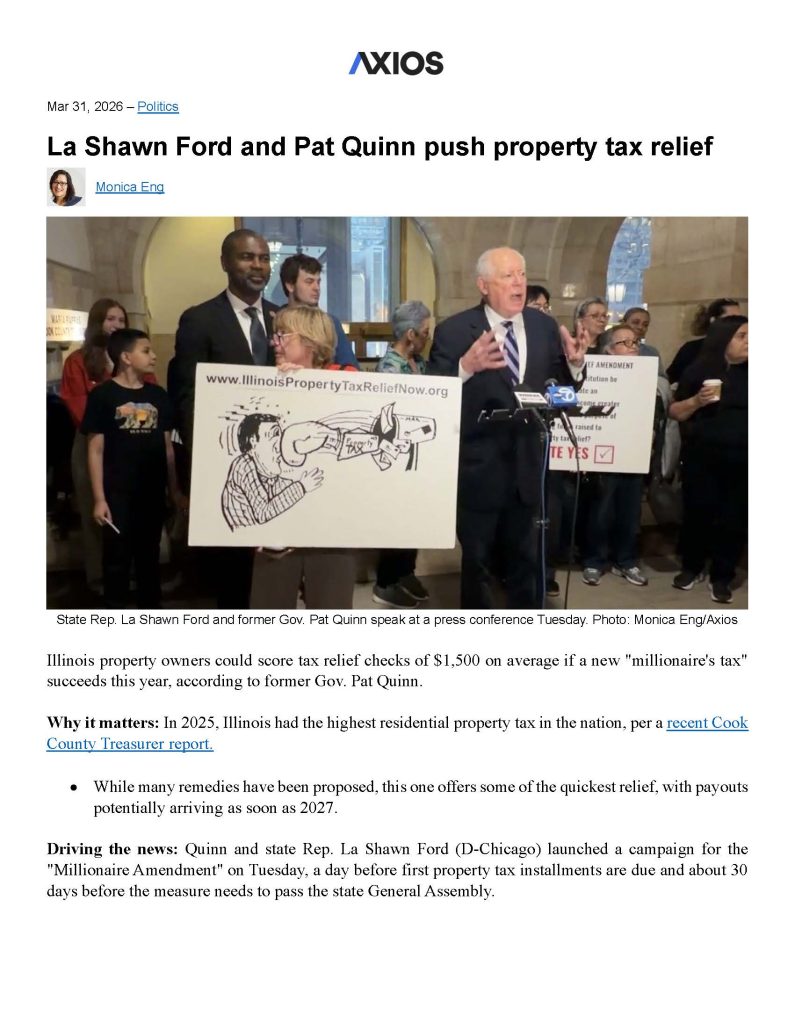
Over 28 years we have been able to pass a handful of property tax reform laws but have always advocated for a complete Illinois tax overhaul. That is why we supported an Illinois Constitutional Convention every 20 years. in 1988, 2008 and now focused on 2028. Tax reform just doesn’t get through the IL GA until we are in a financial crisis. We support a constitutional amendment that will forever change the income tax structure for the first time since the frist IL 1969 Constitutional Convention got rid of the personal property tax. We support these IL leaders Manley and Ford bills which will take 3/5 of all the state reps —71 House & 36 Senate members to pass. A miracle might happen.
House Joint Resolution 21, Sponsored by Natalie A. Manley
https://www.ilga.gov/documents/legislation/104/HJRCA/PDF/10400HC0021lv.pdf
House Joint Resolution 26, Sponsored by LaShawn Ford
https://www.ilga.gov/documents/legislation/104/HJRCA/PDF/10400HC0026lv.pdf
Please see the report link about a tax on households earning $1 million or more annually. The report notes that Illinois has a highly-regressive tax system in which middle- and lower-income households pay a greater share of their incomes toward taxes (especially property taxes) than higher-income households. Property taxes have been rising, especially for education-based levies, in Illinois. The study reviewed how millionaire taxes in other states affected overall economic performance and concluded that instituting a millionaire tax was unlikely to negatively affect Illinois’ economic growth or cause wealth flight.
The report offered 3 proposals for how the millionaire tax could mitigate Illinois’ regressive tax regime:
Option 1. Add a millionaire tax and give 3.1 million qualifying property taxpayers a $1,500 rebate to help offset property tax costs.Option 2. Add a millionaire tax and use the collected funds to pay for Illinois’ school budget needs, reducing the school system’s reliance on property taxesOption 3. Add a millionaire tax, using the revenue for both education funding and property tax relief, which could include some amendments to PTELL
https://www.illinoisepi.org/wp-content/uploads/2026/03/ILEPI-PMCR-Millionaires-Tax-Report-FINAL.pdf
Raila Initiates 2 Taxpayer Reform Bills in Springfield please also support these measurers thank you!
Residential homes and 2-6 flat sales are at historic lows. Limited sales are often inflated. The Cook County Assessor’s office uses mass appraisal algorithms rather than on-site inspections followed by certified individual appraisals. Appraisals more accurately determine residential market values over algorithms, especially for new construction and unique property characteristics or circumstances. Homeowners are increasingly pressured to obtain independent appraisals to successfully challenge their assessments.
Moreover, when searching for comparable properties, evidence of “lack of uniformity” has become more difficult, as the Assessor will place almost 40-50% of a home’s total market value on the land.
To address this issue, Raila initiated House Bill 4358, designed to level the playing field by reimbursing residential property owners for the cost of an appraisal used to achieve a successful tax appeal – thereby reducing the financial burden on taxpayers seeking fair and accurate assessments.
Raila also initiated Senate Bill 2929 to address a critical due process failure in the Assessor’s back-taxation (omitted assessment) notice system. Back-taxation notices are frequently sent with incorrect ownership information and mailed to inaccurate addresses. When property is omitted from the tax rolls, in whole or part, the Assessor may retroactively impose taxes for prior years – often resulting in substantial, unexpected liabilities.
Under current practice, these notices are sent by regular U.S. mail, and may reach the wrong party or go unreceived. Because omitted assessments can extend back up to three years, taxpayers often lose the opportunity to appeal in a timely manner simply because they were never properly notified.
According to the Assessor, no statutes provide a clear processfor notification. SB 2929 requires the Assessor to send omitted assessment notices by registered mail, consistent with due process standards used in other jurisdictions. It mandates that the Assessor verify the correct owner of record through true warranty deed for the relevant tax years and confirm accurate ownership and address information through the Illinois Secretary of State before issuing any tax demand.