AI Mode
In the 19th century, liberal and reform-minded journalism evolved from fiercely partisan political papers to a more investigative and socially conscious "watchdog" style. These writers, often identified with early liberal movements or later "muckraking," focused on exposing corruption, advocating for civil rights, and championing the marginalized.
Leading Publishers and Editors
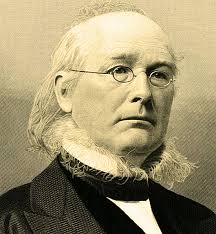
- Horace Greeley (New-York Tribune): A central figure in 19th-century liberal journalism, Greeley founded the Tribune and used it to promote radical reforms, including abolition, feminism, and workers' rights. He eventually ran for president as the Liberal Republican Party nominee in 1872.
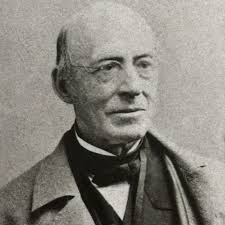
- William Lloyd Garrison (The Liberator): A radical liberal publisher who edited The Liberator from 1831 to 1865, dedicating his life to the "truth" of immediate abolition and equal rights for Black Americans.
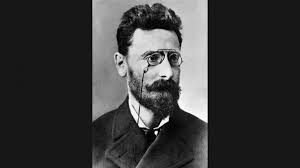
- Joseph Pulitzer (St. Louis Post-Dispatch & New York World): While later associated with "yellow journalism," Pulitzer began his career as a voice for the Democratic Party and the "common man," using his publications to mount "crusades" against corruption.
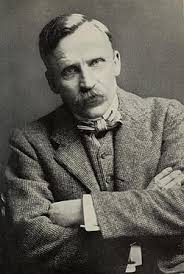
- S.S. McClure (McClure’s Magazine): A pioneer of the investigative magazine format, McClure published the first "muckrakers" in the late 1800s, focusing on corporate monopolies and urban poverty.
Reporters and Investigative Journalists
- Ida B. Wells: A pioneering Black journalist who documented the "truth" of lynching in the 1890s, using investigative reporting to expose how it was used to intimidate Black political and economic competitors.
- Frederick Douglass: After escaping slavery, he published The North Star (motto: "Truth is of no Color"), advocating for abolition and women's rights.
- Nellie Bly (Elizabeth Cochrane): A trailblazer for undercover investigative journalism, most famous for her 1887 exposé of the brutal conditions in a New York mental asylum.
- Ida Tarbell: Though her most famous work peaked in the early 1900s, she began her career in the late 19th century, eventually exposing the questionable business practices of John D. Rockefeller's Standard Oil.
- Charles Dickens: In Britain, Dickens was not only a novelist but a prominent journalist and social critic who used his writing to attack social ills such as child labor and the poor laws.
- Upton Sinclair: A "social crusader" who pioneered "muckraking" by working undercover to expose unsanitary conditions in the meatpacking industry (The Jungle).
Summary of Liberal 19th-Century Figures
| Primary Role | Key Focus / Achievement | |
|---|---|---|
| Horace Greeley | Publisher | Founder of New-York Tribune; 1872 Liberal Republican nominee. |
| Ida B. Wells | Reporter/Editor | Exposed the reality of lynchings and racial injustice. |
| Frederick Douglass | Publisher/Writer | Used The North Star to champion abolition and universal rights. |
| Nellie Bly | Reporter | Pioneered undercover investigative reporting for social reform. |
| William Lloyd Garrison | Publisher | Edited The Liberator; led the radical abolitionist press movement. |
| Victor Hugo | Journalist/Author | Independent liberal and human rights activist in France. |
Horace Greeley used the New-York Tribune as a "bully pulpit" to champion a vast array of social, economic, and moral reforms aimed at creating a more egalitarian society.
His primary advocacy efforts included:
- Abolition of Slavery: This was Greeley's most significant cause. He fiercely opposed the expansion of slavery into new territories and used the Tribune to pressure President Abraham Lincoln for immediate emancipation during the Civil War, most famously in his 1862 editorial, "The Prayer of Twenty Millions".
- Labor Rights and Cooperatives: A staunch supporter of the working class, Greeley advocated for labor unions, workers' cooperatives, and the ten-hour workday. In 1850, he became the first president of the New York Printers' Union.
- Land Reform and Western Migration: He promoted the Homestead Act, advocating for the free distribution of government land to settlers rather than selling it to wealthy speculators. He famously popularized the slogan, "Go West, young man, and grow up with the country" as a solution to urban poverty.
- Utopian Socialism (Fourierism): Throughout the 1840s, Greeley used his columns to spread the "Associationist Gospel" based on the teachings of Charles Fourier, which proposed communal living and shared labor to eliminate class dominance.
- Women's Rights: While he eventually wavered on women's suffrage (voting rights), he was an early champion of wider feminism, hiring Margaret Fuller as the nation's first full-time female book reviewer and foreign correspondent.
- Moral Reforms: Greeley campaigned relentlessly against what he saw as social ills, including capital punishment, alcohol (supporting temperance and the "Maine Law" prohibition), tobacco, and gambling.
- Economic Protectionism: He supported high protective tariffs to foster domestic industry and create jobs for American laborers.
Horace Greeley’s aggressive advocacy for social and political reforms produced far-reaching consequences, ranging from shifting the course of American history to the tragic collapse of his own health and career.
1. Political Realignment and the Rise of the Republican Party
Greeley’s tireless editorial campaign against the expansion of slavery was a primary catalyst in the dissolution of the Whig Party and the subsequent founding of the Republican Party in 1854. By turning the New-York Tribune into the "political bible" of the North, he successfully unified disparate groups—abolitionists, labor activists, and Free Soil advocates—into a powerful new political coalition.
2. Influence on the Civil War and Emancipation
His persistent pressure on Abraham Lincoln significantly influenced the timing and focus of the Civil War.
- Emancipation: His famous 1862 editorial, "The Prayer of Twenty Millions," publicly challenged Lincoln for his perceived reluctance to free enslaved people. This public discourse is credited with setting the stage for the Emancipation Proclamation.
- Aggressive Warfare: Early in the war, his paper popularized the "On to Richmond!" slogan. When the resulting Union defeat at Bull Run occurred, Greeley faced intense public backlash for his strategic militancy.
3. Personal Backlash and Physical Danger
Greeley’s radical stances made him a frequent target of both verbal and physical abuse:
- Violence: In 1856, he was physically assaulted on the streets of Washington, D.C., by a pro-slavery congressman.
- Mob Attacks: During the 1863 New York Draft Riots, the Tribune offices were targeted by a mob that intended to lynch Greeley for his abolitionist views; the building was saved only by employee-led armed defense.
4. Loss of Public Influence and Repudiation
In the post-war era, some of his reformist decisions severely damaged his reputation:
- Southern Amnesty: His advocacy for reconciliation, specifically his decision to sign the bail bond for former Confederate President Jefferson Davis in 1867, outraged Northern readers and caused the Tribune to lose nearly half of its subscribers.
- Presidential Defeat: His 1872 run for president as the Liberal Republican nominee ended in a landslide defeat. He was ridiculed in the press as a "crank" and "fool," leading him to remark that he felt more like he was running for "the penitentiary" than the presidency.
5. Final Collapse of Health and Career
The cumulative strain of his lifelong advocacy and the disastrous 1872 campaign led to a rapid personal decline:
- Loss of Control: Following his electoral defeat, he discovered he had lost controlling interest in the Tribune, the paper he founded and spent 30 years building.
- Death: Crushed by the death of his wife, his massive political defeat, and the loss of his editorship, Greeley suffered a mental and physical breakdown. He died on November 29, 1872, before the Electoral College could even cast its votes.