Submitted by AJ Jones, PhotoJournalist
Reprint from SFSMag1 — Chicago Voices & Vision
By SFSMag1
In Chicago, photography has always been more than simply pointing a camera at a subject. At its best, photography becomes documentation, testimony and a visual record of a community’s history.
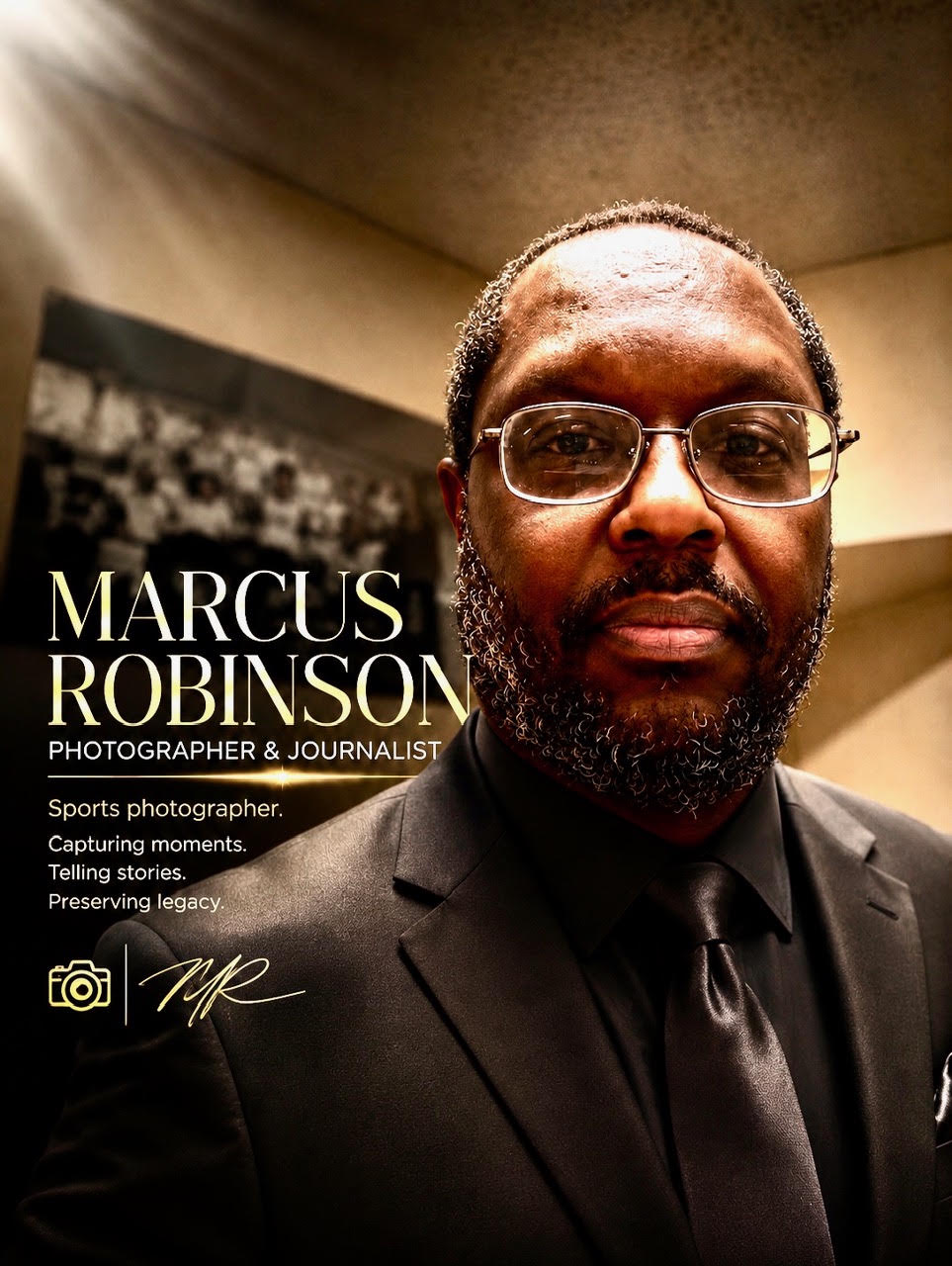
Marcus Robinson represents that tradition.
Robinson has worked as an independent photographer for Black news organizations, documenting people and events while bringing a perspective shaped by his connection to Chicago communities. His work has placed him in the middle of important conversations about representation, policing and life on Chicago’s South Side.
One example came during the intense public debate surrounding policing in Chicago. Speaking to the Chicago Defender, Robinson emphasized the importance of having officers who understand the communities they serve. His observations came from personal experience and from witnessing interactions between police and young people in Chicago neighborhoods.
That perspective says something important about Robinson’s approach to photography: the photographer is not merely an observer.
The camera can became a bridge between communities and the broader public.
A Chicago Eye
For photographers working in the Black press, the assignment often carries a deeper responsibility. Images can preserve moments that might otherwise disappear from the historical record. A photograph of at a community gathering, an artist, a neighborhood leader or an important cultural event can become part of the visual history of an entire city.
That is particularly significant in Chicago, where generations of photographers have documented the people, struggles, celebrations and cultural movements that have shaped the city. Robinson’s work fits within that larger tradition of visual storytelling.
More Than a Photograph
The strongest documentary photographs don’t simply show us what happened. They make us ask why it happened, who was there, and what it meant to the people involved. That is where photography and journalism meet. For SFSMag1, that connection is especially relevant. A publication built around photography has an opportunity to recognize photographers not simply for the images they produce, but for the history they preserve.
Marcus Robinson’s story is therefore bigger than an individual photograph. It is about access, perspective and representation. It is about who gets to tell the story—and who gets remembered when the cameras are gone.
Marcus Robinson’s work reminds us that the camera can be both an artistic instrument and a historical witness. In Chicago’s Black media tradition, that role matters. Every generation leaves behind photographs. The question is whether those photographs accurately reflect the people, places and moments that defined the era.
That’s why photographers matter. That’s why the Black press matters. And that’s why the visual record of Chicago deserves to be preserved. SFSMag1 — Documenting the Culture. Preserving the Moment.